Financial Literacy Month – Tip #15

Create a financial calendar and set reminders for important money due dates. Due dates vary and a late payment can be costly to both your wallet and credit. 

Grab your calendar or phone and simply note the date various items are due. For example, income taxes, property taxes, quarterly tax payments, etc..

You can also note reminders to schedule calls with your financial advisor or pull an annual credit report. Scheduling financial dates allows you to plan and budget for your upcoming payments, an important step to keep you financially healthy!
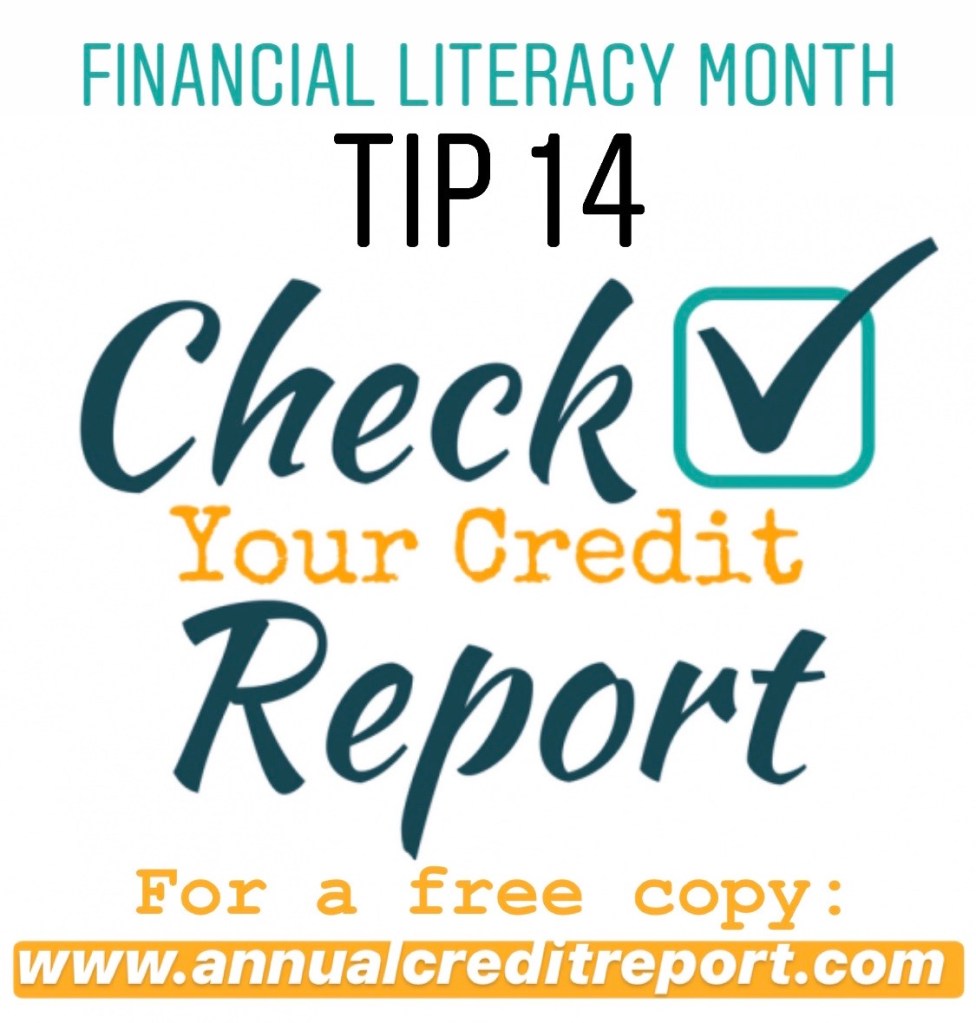

Financial Literacy Month – Tip #14

Just like going to the Doctor, reviewing your credit annually is an essential part of your financial health. It is an opportunity to review payment history, dispute erroneous information reported by creditors, and detect any signs of identity theft. 

Federal law allows you to obtain one free copy per year. To receive a report from all three bureaus (Equifax, TransUnion, Experian), visit: www.annualcreditreport.com. The website will allow you to either order one report per year or you can space it out and order one report from each bureau every four months. For example, January order Equifax, May order TransUnion, and September order Experian. Option one provides the complete credit history picture and is easy to calendar annually (best choice). 

Maintaining a good credit history is the key to obtaining a competitive interest rate on a mortgage loan, auto loan or credit card. Credit can also impact a job application or a property lease. Take a minute, hit the link, and get your free credit checkup today!

Financial Literacy Month = Tip #13

Schedule a time to talk with your Financial Advisor. With daily headline news reporting market volatility, financial uncertainty, and a grim outlook for the financial markets, there is no time like the present to schedule this call. 

A call with your Financial Advisor will help you understand how to navigate your investments during this volatile market and will give you an opportunity to set and adjust goals based on market fluctuations. It is your money, being proactive about your portfolio will keep you on track with meeting your financial goals.

Financial Literacy Month – Tip #11

Staying home provides great opportunities to get financially creative with activities. The world premiere of Trolls got me thinking….a family of four can watch Trolls from the comfort of their home for $25 (snacks included), whereas a trip to the theatre can be upwards of $60-$100 (depending on the size of your family). Throw in dinner at a restaurant and your outing just increased to $150-$200. 

Pandemic or not, getting creative with “how” you see a movie, can provide savvy savings for parents and financial life lessons for kids. Happy watching and cheers to teaching the next generation smart spending habits!